
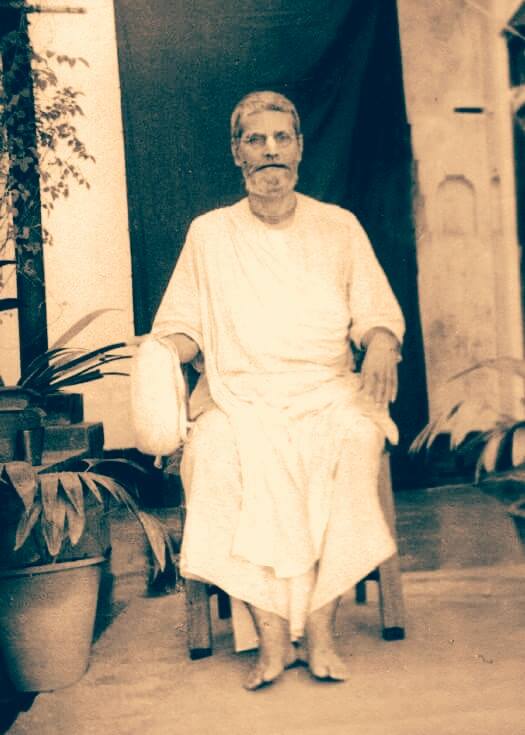
Śrīla Bhakti Prajñāna Keśava Gosvāmī Mahārāja
and the Founding of Śrī Keśavajī Gauḍīya Maṭha
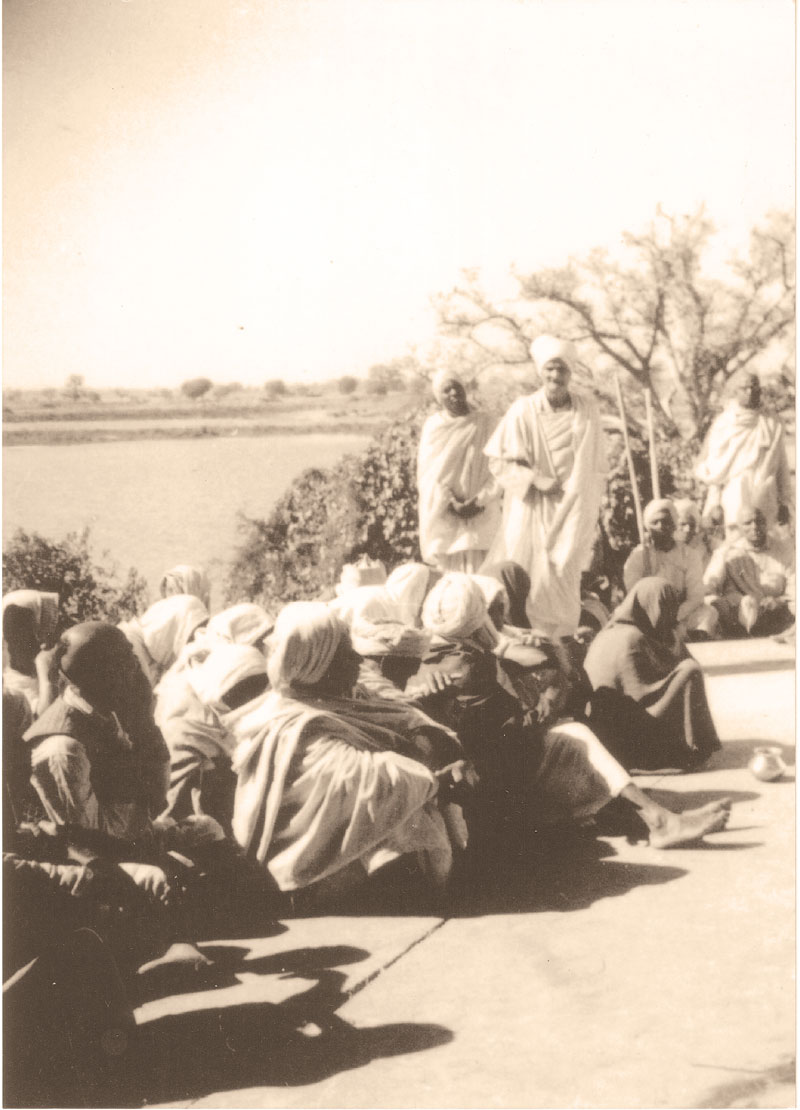 Śrī Vraja-maṇḍala parikramā
Śrīla Bhakti Prajñāna Keśava Gosvāmī Mahārāja and Śrī Mathurā
Our revered Paramagurudeva, nitya-līlā-praviṣṭa oṁ viṣṇupāda aṣṭottara-śata-śrī Śrīmad Bhakti Prajñāna Keśava Gosvāmī Mahārāja, an intimate associate of Śrīla Bhaktisiddhānta Sarasvatī Ṭhākura Prabhupāda, achieved several significant accomplishments in Śrī Vraja-maṇḍala. His aim was to address Śrīla Prabhupāda’s concerns for Mathurā-maṇḍala [refer to Part 2] and thus fulfil his innermost desires.
A striking feature of Paramagurudeva’s fearless and influential preaching was his deliberate establishment of some maṭhas and preaching centres in places where either strong indifference or strong opposition to pure Gauḍīya siddhānta was most deeply rooted and where traditional conceptions and practices had created what seemed like an impenetrable stronghold. He went right to the source of such indifference and opposition and actively propagated, in that very place, pure rūpānuga conceptions as revealed by Śrīla Prabhupāda.
For example, Paramagurudeva did not open a maṭha in Māyāpura, the birthplace of Śrī Caitanya Mahāprabhu and the place where Śrīla Sarasvatī Ṭhākura Prabhupāda performed intense nāma-bhajana and founded the Śrī Caitanya Maṭha. For Śrīla Prabhupāda’s followers, the Sarasvāta Vaiṣṇavas, Śrī Māyāpura is also the most conducive place for devotional practice, because so many of his dedicated disciples established their centres there. Paramagurudeva was the first among Śrīla Prabhupāda's disciples to boldly found his instutional headquarters not in Māyāpura but in Koladvīpa, where Śrīla Prabhupāda had been attacked by smārta-brāhmaṇas and sahajiyās and where preaching pure rūpānuga sarasvāta conceptions had once been impossible.
By his unfaltering guru-niṣṭhā and uncompromising presentation of siddhānta, those very adversaries who had once opposed Śrīla Prabhupāda were compelled to acknowledge his greatness, as vividly recounted by our Śrīla Gurudeva in a class in Devānanda Gauḍīya Maṭha in 1994: “This Mahāpuruṣa”.
In the same spirit, in Vraja-maṇḍala, Paramagurudeva’s initial focus was not to establish a maṭha in Vṛndāvana or at Govardhana—places celebrated as being the most exalted for rūpānuga Gauḍīya bhajana—but in Mathurā, the stronghold of scholars from various sampradāyas. There Gauḍīya Vaiṣṇava philosophy was mostly disregarded by renowned scholars and respectable sampradāyika Vaiṣṇavas. His aim was to address Śrīla Prabhupāda’s concern for Mathurā-maṇḍala and thus fulfil his innermost desire: to firmly establish rūpānuga Gauḍīya conceptions in the very place that failed to acknowledge them, due to their not being properly introduced.
Revival of Śrī Vraja-maṇḍala parikramā
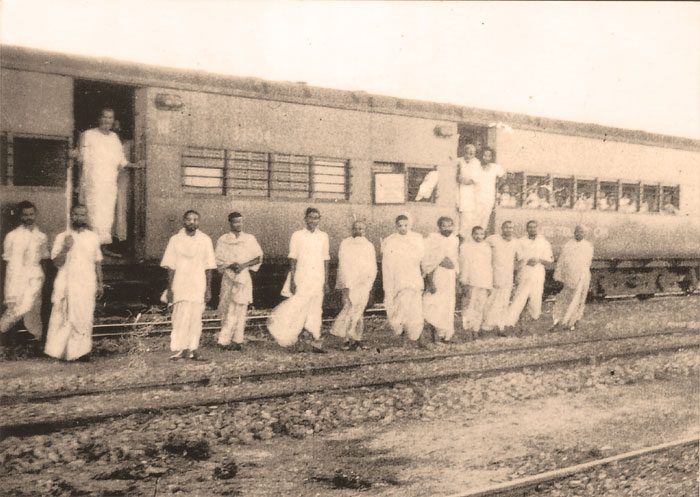
After the disappearance of Śrīla Prabhupāda, the Śrī Vraja-maṇḍala parikramā, which was initiated by him and which was his heartfelt 3 desire, was initially re-established and organized by Śrīla Bhakti Prajñāna Keśava Gosvāmī Mahārāja, along with his god- brothers, in the year 1944. On 30 September, 1944, their journey began from Howrah, with approximately 150 pilgrims traveling in a reserved compartment of a train. The train reached Hathras Junction on 2 October at 7:30 AM. From there, the pilgrims proceeded to Ābhāgaḍa Rājā’s Dharmśālā in Mathurā, arriving at 2 PM.
On 3 October 1944, at 7 AM, under the guidance of Śrīla Bhakti Prajñāna Keśava Gosvāmī Mahārāja and other esteemed disciples of Śrīla Prabhupāda, such as Śrīmad Bhakti Kuśala Nārasiṁha Mahārāja, Śrīmad Bhakti Sarvasva Giri Mahārāja, Śrīmad Bhakti Hṛdaya Vana Mahārāja, Śrīmad Bhakti Prakāśa Araṇya Mahārāja, and others, the Mathurā parikramā commenced with a brass band. During this parikramā, the devotees took darśana of and circumambuled various holy sites, including Śrī Ādi Keśava Mandira, Śrī Kṛṣṇa-janmabhūmi, Bhūteśvara Mahādeva, Kaṁsa-ṭīlā, Viśrāma- ghāṭa, and other sacred places.
Until 8 October, devotees stayed in the dharmaśālā in Mathurā. They took darśana by hearing the hari-kathā from śrī guru and Vaiṣṇavas about various sites along the Yamunā, such as the different ghāṭas, as well as Dīrgha-Viṣṇu, Lauhavana, Gokula, Mahāvana, Brahmāṇḍa-ghāṭa, Rāvala, and other sacred places. From October 9, the pilgrims proceeded to Madhuvana, and they stayed in camps during the parikramā of Govardhana and other holy sites.
Under the guidance of Paramagurudeva, the second Vraja-maṇḍala parikramā commenced on 17 October 1951. Around 200 pilgrims began their journey from Howrah Station, travelling in a reserved bogie. Upon their arrival in Mathurā, they went to reside in the large dharmaśālā situated in Helan Ganj. Following in the footsteps of Śrīla Prabhupāda, they commenced their auspicious parikramā of Śrī Vraja-maṇḍala, visiting all twelve forests.
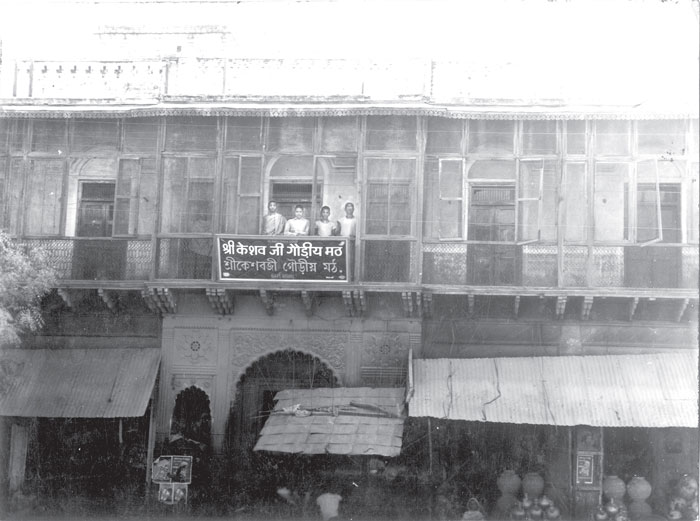 Śrī Keśavajī Gauḍīya Maṭha, 1954
The establishment of Śrī Keśavajī Gauḍīya Maṭha in Mathurā
To fulfil the heartfelt desire of jagad-guru oṁ viṣṇupāda Śrīla Bhaktisiddhānta Sarasvatī Gosvāmī Prabhupāda, on the day commemorating his disappearance – 13 December 1954 (Monday) – his intimate associate nitya- līlā-praviṣṭa oṁ viṣṇupāda aṣṭottara-śata-śrī Śrīmad Bhakti Prajñāna Keśava Gosvāmī Mahārāja acquired a grand two-storied building in the city of Mathurā. It had a large hall and 35 rooms. This site was situated near Dampier Park and the district hospital. It was close to the famous Kaṁsa-ṭīlā and Raṅgeśvara Mahādeva, and it was also close to Holī Gate, the Imperial Bank, the main post office, the old busstand, the market, and not far from the Mathurā Cantonment railway station.
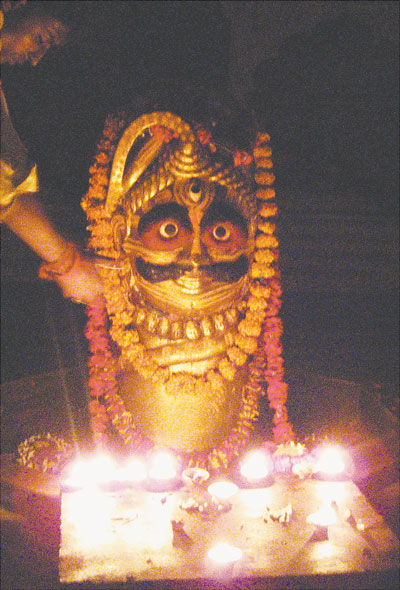 Raṅgeśvara MahādevaIn 1932, during the Vraja-maṇḍala parikramā, Śrīla Bhaktisiddhānta Sarasvatī Ṭhākura Prabhupāda, along with the parikramā party, also had taken darśana of Kaṁsa-ṭīlā and Raṅgeśvara Mahādeva near this place. Śrīla Rūpa Gosvāmī came from Śrī Keśavajī Gauḍīya Maṭha, 1954 Vṛndāvana to Mathurā and stayed in Mathurā for one month, when Śrī Gopālajī was brought from Govardhana to Mathurā out of fear of the Yavanas. During that time, while visiting and touching various sites of kṛṣṇa-līlā, he, also, had darśana of Kaṁsa-ṭīlā and Raṅgeśvara Mahādeva. While residing in this sacred Mathurā-dhāma, he composed the book Śrī Mathurā-māhātmya. Śrīla Bhakti Prajñāna Keśava Gosvāmī Mahārāja established the Śrī Keśavajī Gauḍīya Maṭha on the disappearance day of Śrīla Prabhupāda. The maṭha’s location was on the Mathurā parikramā path, the sacred land sanctified by the footsteps of Śrīla Rūpa Gosvāmī and Śrīla Prabhupāda. He named the maṭha after the presiding deity of Mathurā, Śrī Keśavadeva.
Soon after, Śrīla Bhakti Prajñāna Keśava Gosvāmī Mahārāja appointed our Śrīla Gurudeva, Śrīla Bhaktivedānta Nārāyaṇa Gosvāmī Mahārāja, the guardian of Śrī Keśavajī Gauḍīya Maṭha.
He also awarded sannyāsa to Śrīla Bhaktivedānta Svāmī Mahārāja at Śrī Keśavajī Gauḍīya Maṭha, so that he could propagate śrī gaura-vāṇī in English throughout the Western countries, thus fulfilling the desire of Śrīla Prabhupāda.
The organization of Śrī Vraja-maṇḍala parikramā commencing from Śrī Keśavajī Gauḍīya Maṭha
Every year, the month-long Śrī Vraja- maṇḍala parikramā organized by Śrī Keśavajī Gauḍīya Maṭha provides an excellent opportunity for spiritual seekers from India and abroad to engage in transcendental practice (paramārtha anuśīlana). The first Śrī Vraja-maṇḍala parikramā from Śrī Keśavajī Gauḍīya Maṭha commenced on 29 October, 1955. The hari-kathā was delivered by Śrīmad Bhakti Bhūdeva Śrautī Mahārāja, Śrīmad Bhakti Vijñāna Āśrama Mahārāja, Śrīmad Bhakti Jīvana Janārdana Mahārāja and other devotees sheltered at the lotus feet of Śrīla Prabhupāda. On 15 November that year, the Śrī Annakūṭa Mahotsava and Śrī Govardhana-pūjā were celebrated at Śrī Keśavajī Maṭha. The large hall of the maṭha was filled with offerings of bhoga. The local people Mathurā had never before witnessed such a grand Annakūṭa celebration in Mathurā.
The installation of śrī vigraha and the grand Annakūṭa mahotsava at Śrī Keśavajī Gauḍīya Maṭha
On 3 November 1956 (Saturday), on the auspicious occasion of Śrī Govardhana- pūjā and Annakūṭa Mahotsava, Śrīla Bhakti Prajñāna Keśava Gosvāmī Mahārāja unveiled service to his worshipable deities, Śrī Śrī Gaura-Rādhā-Vinoda-vihārījī, at Śrī Keśavajī Gauḍīya Maṭha, thus providing his disciples and the people of the world an opportunity to serve Them. The deities’ installation ceremony was recorded in the maṭha’s publications.
The deity installation festival (śrī vigraha- pratiṣṭhā) at Śrī Keśavajī Gauḍīya Maṭha was conducted with due ceremony. The ritualistic abhiṣeka and worship was initiated with the assistance of Śrīmad Bhakti Bhūdeva Śrautī Mahārāja, Śrīmad Bhaktivedānta Trivikrama Mahārāja, and Śrī Rasarāja Vrajavāsī Prabhu. Śrīmad Bhakti Kuśala Nārasiṁha Mahārāja, Śrīmad Bhakti Deśika Ācārya Mahārāja, Śrīmad Bhaktivedānta Paramārthī Mahārāja, and Śrīmad Bhaktivedānta Nārāyaṇa Mahārāja performed the ceremonial duties. After taking the deities to the sanctum sanctorum, Śrīla Bhakti Prajñāna Keśava Gosvāmī Mahārāja personally completed the prāṇa-pratiṣṭhā (ceremony invoking Their divine presence). While chanting the verse “rādhā-cintā-niveśena yasya kāntir vilopita, śrī-kṛṣṇa-caraṇam vande rādhāliṅgita- vigraham”, he elucidated the philosophical significance of the white marble deity of Śrī Rādhā-Vinoda-vihārījī.
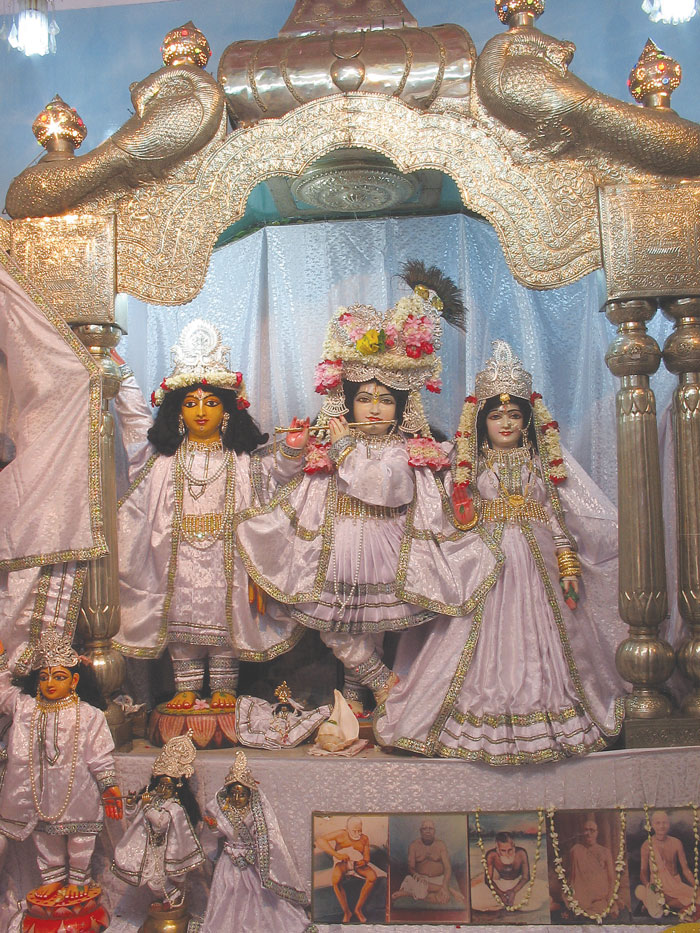 Śrī Śrī Rādhā-Vinoda-vihārījī.
At that time, many devotees expressed how sweet and charming the darśana of the deities was. It felt like He had manifested His divine form after being attracted by the unparalleled love of the abode of love. [In other words, Śrī Kṛṣṇa manifested His beautiful white form upon being immersed in the love of Śrī Rādhā]. A grand Annakūṭa offering was placed before Śrī Girirāja at the front of the temple hall and offered to the deities. College professors, school teachers, lawyers, and scholars from Mathurā city participated in the ceremony and listened to religious discourses by Śrīla Paramagurudeva. They received darśana of the deities and joyfully honoured the extraordinary mahā-prasāda.
Śrīla Bhakti Prajñāna Keśava Gosvāmī Mahārāja’s arrival at Śrī Keśavajī Gauḍīya Maṭha to observe Janmāṣṭamī and Rādhāṣṭamī
In 1959, Śrīla Bhakti Prajñāna Keśava Gosvāmī Mahārāja arrived at Śrī Keśavajī Gauḍīya Maṭha in the holy land of Mathurā, one week prior to Janmāṣṭamī. During his stay, he inspired great enthusiasm within the maṭha sevakas to perform their service. On the auspicious day of Janmāṣṭamī, he organized a grand assembly and delivered a profound and insightful discourse, in which he gave a comparative analysis of the supreme reality of Śrī Kṛṣṇa in relation to other divine manifestations. The following day, on Śrī Nandotsava, a variety of mahā-prasāda was distributed to numerous local devotees and visitors.
In that same year, 1959, during the assembly held on the occasion of Śrī Rādhāṣṭamī at Śrī Keśavajī Gauḍīya Maṭha, Śrīla Paramagurudeva stated: “In some places within Vraja-maṇḍala, certain people observe fasting on the day of Śrī Rādhāṣṭamī. At Śrī Keśavajī Gauḍīya Maṭha, however, a kīrtana- mahotsava is observed on this sacred day, and the tradition of fasting is not followed. This is because Śrī Hari-bhakti-vilāsa does not endorse fasting on the occasion of the appearance or disappearance of śakti- tattva. According to local custom, some lady devotees do observe fasting on the appearance day of Śrīmatī Rādhārāṇī, who is the foremost among the seven chaste women, but for one- pointed Vaiṣṇavas, it is not necessary to fast on this day.”
The sannyāsa ceremony of Śrīla Bhaktivedānta Svāmī Mahārāja at Śrī Keśavajī Gauḍīya Maṭha
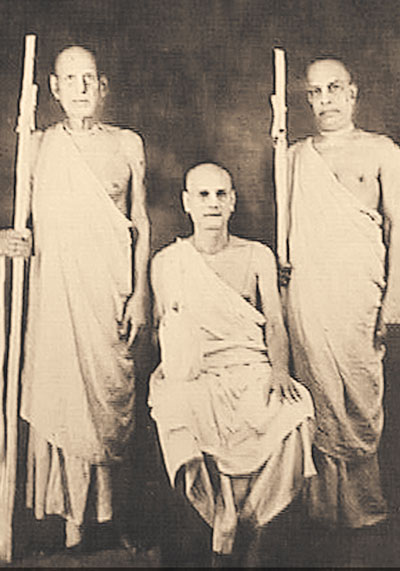 Śrīla Bhakti Prajñāna Keśava Gosvāmī Mahārāja (sitting) Śrī Śrīmad Bhaktivedānta Svāmī Mahārāja (standing right) Śrī Śrīmad Bhaktivedānta Muni Mahārāja (standing left)It was on the repeated, earnest requests* of our paramārādhya Śrīla Gurudeva, Śrī Śrīmad Bhaktivedānta Nārāyaṇa Gosvāmī Mahārāja, that Paramagurudeva, Śrīla Bhakti Prajñāna Keśava Gosvāmī Mahārāja, awarded sannyāsa-mantra and saffron cloth to his godbrothers, Śrī Abhaya Caraṇāravinda Prabhu and Śrī Sanātana Prabhu, on 17th September 1959, Pūrṇimā during the Viśvarūpa-Mahotsava festival. Śrī Abhaya Caraṇāravinda Prabhu was one of the founding members of the Śrī Gauḍīya Vedānta Samiti. After accepting sannyāsa, they received the names Śrīmad Bhaktivedānta Svāmī Mahārāja and Śrīmad Bhaktivedānta Muni Mahārāja, respectively. The sannyāsa ceremony was conducted by Śrīla Bhaktivedānta Nārāyaṇa Gosvāmī Mahārāja. Some years later, Śrīla Bhaktivedānta Svāmī Mahārāja propagated the message of Śrīman Mahāprabhu and the chanting of the śrī nāma-saṅkīrtana throughout the entire world through the medium of his International Society for Kṛṣṇa Consciousness.
_____________________
* Please refer to Letters from America (published by GVP), letter dated 22 October 1968, to read Śrīla Bhaktivedānta Svāmī Mahārāja’s personal description of this.
Śrīla Bhakti Prajñāna Keśava Gosvāmī Mahārāja’s visits to Śrī Keśavajī Gauḍīya Maṭha, Mathurā, over the years
In the year 1966, Paramagurudeva stayed at Śrī Keśavajī Gauḍīya Maṭha for more than a month. Many highly educated, local personalities would come daily to listen to his hari-kathā.
On 24 October 1966, when Śrīmad Bhaktivedānta Bhikṣu Mahārāja, promoter of Śrī Bhāgavata Patrikā, departed for his destined abode, his viraha-sabhā (remembrance assembly) was held at Śrī Keśavajī Gauḍīya Maṭha. On that occasion, Paramagurudeva said, “Because I am a lifelong brahmacārī, I never experienced the kind of sorrow one feels upon being separated from one’s own child, but now, I am fully experiencing the pain of separation from a disciple. This is the fourth renounced disciple I am enduring separation from. Prior to this, Śrīmān Jagabandhu, Śrīmān Anaṅga Mohan, and Śrīmān Govardhana departed. Bhikṣu Mahārāja’s profound guru-niṣṭhā was exemplary. He has attained Vaikuṇṭha and secured a place at the lotus feet of Śrī Kṛṣṇa. Even if a sādhaka suffers from every sort of fault, guru-niṣṭhā alone is capable of granting him entrance into the kingdom of paramārtha (the greatest wealth, prema). In the absence of guru-niṣṭhā, however, all good qualities combined cannot help a sādhaka reach the realm of paramārtha. As such, guru-niṣṭhā is the cornerstone in the attainment of divine love for Kṛṣṇa.”
That year, after he had inundated the holy land of Mathurā with the nectar of śrī gaura-vāṇī and upon the conclusion of Dāmodara-vrata, Paramagurudeva embarked on an auspicious journey for Śrī Navadvīpa-dhāma, via Lucknow and Kāśī.
In the month of Kārtika, 1967, Paramagurudeva again came to Śrī Keśavajī Gauḍīya Maṭha, where, on 23 October, 1967, a viraha-sabhā was held upon the disappearance of Śrīmad Bhakti Kuśala Nārasiṁha Mahārāja, a blessed recipient of Śrīla Prabhupāda’s mercy and a distributor of Śrī Gauḍīya Patrikā. During this assembly, Śrīla Bhakti Prajñāna Keśava Gosvāmī Mahārāja said, “Śrīla Nārasiṁha Mahārāja was like my right hand. Today, I feel that I have become wounded.”
On 3 November 1967, Śrīmad Bhakti Sarvasva Giri Mahārāja, a beloved associate of Śrīla Prabhupāda, entered nitya-līlā. He was completely dedicated, with his body, mind, and words, to fulfilling the heartfelt desires of Śrīla Prabhupāda. He was a fearless speaker and a preacher of impeccable character, and he had established Śrī Vinoda-vāṇī Gauḍīya Maṭha in Śrīdhāma Vṛndāvana. When news of his disappearance reached Paramagurudeva in Śrī Keśavajī Gauḍīya Maṭha, Paramagurudeva, although ailing and bedridden, was overwhelmed with separation and lamented: “Alas, Śrīla Giri Mahārāja! Śrīla Bhakti Sarvasva Giri Mahārāja has left me helpless.”
After Śrīla Bhakti Sarvasva Giri Mahārāja’s samādhi ceremony at Śrī Vinoda-vāṇī Gauḍīya 9 Maṭha, Paramagurudeva organized a viraha-sabhā in his honour at Śrī Keśavajī Gauḍīya Maṭha on 9 November, 1967. In that assembly, after all the speakers had expressed their heartfelt sorrow, Paramagurudeva spoke with tear-filled eyes and a choked voice: “When I was striving to establish the Vedānta Samiti, Śrīla Bhakti Sarvasva Giri Mahārāja was one of my foremost sources of inspiration. Through his intellect, financial support and other assistance, he aided me in the propagation and preaching of Śrī Bhaktisiddhānta’s vāṇī and thus demonstrated his deep empathy for my cause. In his absence, I am unable to articulate the pain I am experiencing in my heart.”
In this way, our revered Paramagurudeva often visited Śrī Keśavajī Gauḍīya Maṭha, and stay there for substantial periods of time. Whenever Paramagurudeva arrived in Mathurā, our worshipful Śrīla Gurudeva, along with various devotees, would go to the railway station to welcome him. Performing saṅkīrtana, they would greet him and his associates with great joy and enthusiasm and escort him to the maṭha by car. Considering themselves immensely fortunate and supremely blessed, they would serve him with their very lives.
Śrīla Bhaktivedānta Vāmana Gosvāmī Mahārāja, Śrīla Bhaktivedānta Trivikrama Gosvāmī Mahārāja, and other godbrothers of Śrīla Gurudeva would also frequently come and reside at the Śrī Keśavajī Gauḍīya Maṭha Mahurā from time to time.
[To be continued in Part-4]
All glories to Śrī Mathurā-dhāma!
All glories to Śrī Keśavajī Gauḍīya Maṭha!
All glories to the Gauḍīya-rūpānuga-sārasvata Guru Paramparā!
All glories to nitya-līlā- praviṣṭa oṁ viṣṇupāda aṣṭottara-śata-śrī
Śrīmad Bhaktisiddhānta Sarasvatī Ṭhākura Prabhupāda!
All glories to nitya-līlā- praviṣṭa oṁ viṣṇupāda aṣṭottara-śata-śrī
Śrīmad Bhakti Prajñāna Keśava Gosvāmī Mahārāja!
All glories to nitya-līlā- praviṣṭa oṁ viṣṇupāda aṣṭottara-śata-śrī
Śrīmad Bhaktivedānta Nārāyaṇa Gosvāmī Mahārāja!
All glories to their dedicated servants!
Gaura premānande!
Presented by: Mādhava-priya dāsa and Amala-kṛṣṇa dāsa
Source: The Weekly Gauḍīya, Year 11.
Acknowledgements: Pūjā Dāsī
Translated from Śrī Śrī Bhāgavata Patrikā, Year-20 Issue 5-12
by the Rays of The Harmonist team