

Amavasya
Posted: 18 January, 2026
Dedicated to
nitya-līlā praviṣṭa oṁ viṣṇupāda
Śrī Śrīmad Bhakti Prajñāna Keśava Gosvāmī Mahārāja
Inspired by and under the guidance of
Śrī Śrīmad Bhaktivedānta Nārāyaṇa Gosvāmī Mahārāja
A few waves from the ocean of the specialities of
Śrīla Bhaktivedānta Nārāyaṇa Gosvāmī Mahārāja
To read the previous reports, click on the links: Part 1, Part 2, Part 3, Part 4
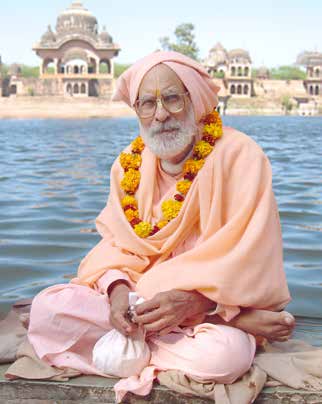
Sweetly bathed in the honey of the praṇaya in Śrīla Keśava Gosvāmī’s heart
 In the second verse of Śrī Śacī-sūnvaṣṭaka, Śrīla Raghunātha dāsa Gosvāmī, absorbed in remembrance of Śrīman Mahāprabhu’s extraordinary pastimes and divine qualities, writes:
purī-devasyāntaḥ praṇaya-madhunā snāna-madhuro …
śacī-sūnuḥ kim me nayana-śaraṇīm yāsyati punaḥ
Will Śacīmātā’s son, who is sweetly bathed in the honey of the love in Īśvara Purī’s heart, again appear on the pathway of my eyes?
Until one is thoroughly bathed in the sweet, honey-like loving sentiments residing in the heart of one’s śrī guru, one cannot truly perform guru-pūjā or fulfil the mano’bhīṣṭa of one’s śrī guru. This is the prime qualification.
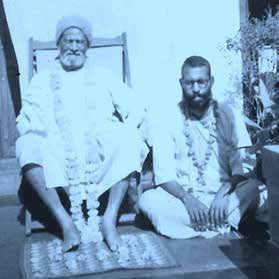
We were greatly fortunate to witness how our Śrīla Gurudeva embodied the deeper meaning of the above stanza in his relationship with his own Gurudeva, Śrīla Bhakti Prajñāna Keśava Gosvāmī Mahārāja, being sweetly bathed in the honey of the praṇaya flowing from Śrīla Keśava Gosvāmī’s heart. This was evident in Śrīla Gurudeva’s unswerving dedication to fulfilling his Gurudeva’s every instruction and desire.
What is the honey of the praṇaya residing in Śrīla Bhakti Prajñāna Keśava Gosvāmī Mahārāja’s heart? It is the same honey that was transmitted to his heart from the heart of Śrīla Prabhupāda Bhaktisiddhānta Sarasvatī Ṭhākura. He then transmitted it to the heart of Śrīla Nārāyaṇa Gosvāmī Mahārāja.
Śrīla Bhakti Prajñāna Keśava Gosvāmī Mahārāja has expressed this in his Śrī Rādhā-Vinoda-bihārī-tattvāṣṭakam. The following is an excerpt from a lecture he delivered at Śrī Devānanda Gauḍīya Maṭha, Navadvīpa, on Śrī Rādhāṣṭamī, 3 September, 1965.
Rādhārāṇī sometimes possesses vāmya-bhāva, a contrary mood, towards Kṛṣṇa, which enhances the variety of Her service to Him. Once Rādhārāṇī was feeling jealous anger (māna). Being absorbed in thoughts of His beloved in this condition, Kṛṣṇa took on Her very complexion:
rādhā-cintā-niveśena yasya kāntir vilopitā
śrī-kṛṣṇa-caraṇaṁ vande rādhāliṅgita-vigrahamŚrī Rādhā-Vinoda-bihārī-Tattvāṣṭakam (1)
[I worship the lotus feet of Śrī Kṛṣṇa who, by being absorbed in anxious thought of Śrīmatī Rādhārāṇī, has assumed Her golden feature.]
This conception is explained in the opening verse. Here the word rādhāliṅgita has two meanings: rādhayā liṅgita and rādhayā āliṅgita. Liṅgita means “marked” or “bearing a sign or impression”, and āliṅgita means “fully embraced”.
Deeply absorbed in vipralambha-bhāva, the mood of separation, Kṛṣṇa was overwhelmed with thoughts of Rādhārāṇī, and He lost His own complexion. In other words, His black lustre disappeared and He assumed Rādhārāṇī’s hue. This, indeed, is rādhāliṅgita-vigraha. This vigraha is manifest here. This tattva is explained in the Svapna-vilāsāmṛtam of Śrīla Viśvanātha Cakravartī Ṭhākura, the king of rasika devotees. My guru-pādapadma has revealed it to the world from the very core of his heart.
Śrīla Prabhupāda was rādhā-pakṣīya (a pālya-dāsī and in the category of nitya- or prāṇa- sakhīs, who are partial to Śrīmatī Rādhikā). Among those who serve vipralambha-rasa through the topmost path of bhajana[rāga-mārga], most will meditate upon Rādhārāṇī’s separation from Kṛṣṇa. However, my guru-pādapadma, Śrīla Prabhupāda, used to meditate on Kṛṣṇa’s separation from Rādhārāṇī.
I want to clarify this with an illustration. When Śrī Kṛṣṇa is engaged in a competitive sport with Rādhārāṇī, those who are rādhā-pakṣīya always think about Her victory and Kṛṣṇa’s defeat. Her victory is their sole desire and purpose. And when Rādhārāṇī wins, they experience profuse bliss and, clapping their hands, declare, “Kṛṣṇa has lost, what a joy!” But those who are kṛṣṇa-pakṣīya are overcome by sadness.
My guru-pādapadma used to think more about Kṛṣṇa’s feeling separation from Rādhārāṇī than Rādhārāṇī’s feeling separation from Kṛṣṇa. In Her separation from Him, Rādhārāṇī is stricken by grief. This type of perfection in vipralambha-bhāva is cherished by ordinary people. However, Śrīla Prabhupāda’s mood was entirely opposite to this. It is indeed Kṛṣṇa who, deeply immersed in thoughts of Rādhārāṇī, has lost His complexion and become rādhāliṅgita-vigraha, the color of His beloved. Śrīman Mahāprabhu has in all respects preached and instructed this type of vipralambha-rasa only. Let Kṛṣṇa remain absorbed in His meditation on Rādhārāṇī. This alone is the ideal of the Śrī Gauḍīya Vedānta Samiti.
Translated from Śrī Gauḍīya Patrikā, Year 17, Issue 9 (1965)
by the Rays of The Harmonist team
In the book Kṛti-ratna, an explanation is given of the eighth verse of this aṣṭakam.
śrī-vinoda-bihārī yo rādhayā milito yadā
tadāhaṁ vandanaṁ kuryāṁ sarasvatī-prasādataḥ (8)By the causeless grace of my gurudeva, Śrīla Sarasvatī Prabhupāda, I worship Śrī Vinoda-bihārī Śrī Kṛṣṇa, when, upon meeting with Śrīmatī Rādhikā, He becomes one with Her.
Śrīla Keśava Gosvāmī Mahārāja demonstrated his highly nuanced realization of aprākṛta by manifesting the service of Śrī Rādhā-Vinoda-bihārī, the treasure of his heart. This extraordinary and unique pastime is the hallmark of his endeavour to propagate prema.
Śrīla Keśava Gosvāmī Mahārāja manifested service to Śrī Rādhā-Vinoda-bihārī in this world, so that all souls could immerse themselves in the ecstasy of the āśraya, which is inherent in their true nature and identity, under the guidance of the root āśraya-vigraha figure, Śrī Rādhārāṇī, who experiences an ecstasy that Parabrahma Kṛṣṇa Himself hankers to taste.
The three deities Śrī Rādhā-Madana-mohana, Śrī Rādhā-Govinda, Śrī Rādhā-Gopīnātha, represent the principles of sambandha, abhidheya and prayojana, respectively. They, along with Śrī Rādhā-ramaṇa, who is famous as Their combined form, and also all the other deity forms of Śrī Kṛṣṇacandra, represent Kṛṣṇa’s absorption in relishing only viṣaya-vinoda, the pleasure He enjoys as the object of love. Even the “melted by love” form of Śrī Jagannātha, assumed due to separation from Rādhā, does not manifest as a result of relishing the deep pleasure experienced by Rādhā (rādhā-vinoda). It is for this reason that the form of Śrī Rādhā-Vinoda-bihārī represents a unique speciality in Gauḍīya society.
Kṛti-ratna
“Vinoda and Vinoda-bihārī”
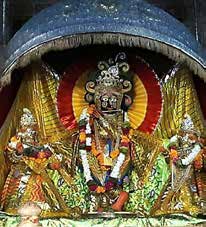
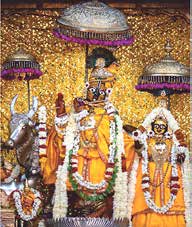
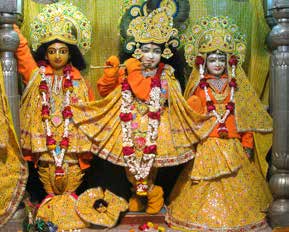 The essence of these sentiments is that those who follow the śrī bhaktivinoda-sārasvata-keśava line of thought aspire to serve that Kṛṣṇa who is feeling separation from Śrīmatī Rādhikā, not that Kṛṣṇa whom Śrīmatī Rādhārāṇī is searching for.
Śrīla Prabhupāda Bhaktisiddhānta Sarasvatī Ṭhākura has given his identity, or sambandha (relationship) as Śrī Vārṣabhānavī-dayita dāsa, that is, the eternal servant of that Kṛṣṇa who is dear to [or feels separation from and searches for] Vṛṣabhānu-nandinī, the daughter of Vṛṣabhānu Mahārāja.
Śrīla Bhaktivinoda Ṭhākura has also expressed this mood in one of his kīrtanas:
vṛṣabhānu-sutā, caraṇa-sevane, ha·ibo ĵe pālya-dāsī
śrī rādhāra sukha, satata sādhane, rahibo āmi prayāsī
To serve the lotus feet of the daughter of King Vṛṣabhānu, I shall become Her pālya-dāsī (affectionately sheltered maidservant) and strive to constantly bring Her all happiness.
rādhā-pakṣa chāḓi’, ĵe-jana se-jana, ĵe-bhāve se-bhāve thāke
āmi to’ rādhikā-pakṣa pāti sadā, kabhu nāhi heri tā’ke
Let anyone aside from Śrī Rādhā’s party be as they are. I am indeed always partial to Śrīmatī Rādhikā and never look upon those who are not.
Immersed in these sentiments of his Gurudeva, his Paramagurudeva, and that of Śrīla Bhaktivinoda Ṭhākura, our Śrīla Gurudeva fulfilled the mano’bhīṣṭa of his guru-varga and truly performed guru-pūjā. How?
Fully dedicated and overwhelmed by moods of service to Vṛṣabhānu-nandinī Śrīmatī Rādhikā (and thus immersed in the service moods of a pālya-dāsī and in the category of nitya- or prāṇa-sakhīs, who are partial to Śrīmatī Rādhikā), Śrīla Gurudeva preached this mano’bhīṣṭa through his hari-kathā, his conversations, his writings, his dealings with devotees, the paintings he guided, the parikramās he organized, and so forth. His sole purpose was to make the souls of this world aspire for this particular mood of rādhā-dāsyam.
tava kathāmṛtaṁ tapta-jīvanaṁ / kavibhir īḍitaṁ kalmaṣāpaham
śravaṇa-maṅgalaṁ śrīmad ātataṁ / bhuvi gṛṇanti ye bhūri-dā janāḥ
Śrīmad-Bhāgavatam (10.31.9)
Ambrosial narrations about You are the life and soul of those tormented by separation from You. Greatly learned devotees (such as Brahmā, Śiva, and the four Kumāras) sing of them. These narrations vanquish the distress of fructified (prārabdha) and unfructified (aprārabdha) sins. Simply hearing them bestows auspiciousness, and they bestow the wealth of prema. Persons who glorify Your pastimes expand the nectar of narrations about You. Therefore, that person who performs kīrtana of Your līlā-kathā in this world is the most generous benefactor.
Those who aspire to be in Śrīmatī Rādhikā’s party (rādhā-pakṣa), however, are not satisfied by general kathā about Kṛṣṇa. The kathā that gives them life is a description of Kṛṣṇa feeling separation from Śrīmatī Rādhikā and thus searching for Her. They are always immersed in discussing this mood.
This kathā, in which Kṛṣṇa is thinking about Rādhārāṇī, is the crest-jewel of all kṛṣṇa-kathā and is the life and soul of followers of Śrīman Mahāprabhu in the line of Śrīla Rūpa Gosvāmī. The kathā of these transcendental sentiments that are transmitted by the best of learned sages, our rūpānuga-sārasvata-guru-varga, not only eradicates one’s sinful reactions and mundane lust but bestows the highest form of good fortune upon whoever hears it. By unveiling such narrations candidly and widely all over the world, our Śrīla Gurudeva certainly became recognized as a true rūpānuga and thus the topmost of those who give munificently in charity.
The crest-jewel of true well-wishers
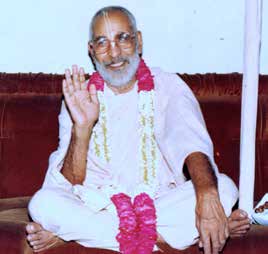 Every ācārya has their speciality, a particular mission. It was clear that Śrīla Gurudeva’s was to highlight what our guru-varga have said about the goal of rūpānuga Gauḍīya Vaiṣṇavism and the means to attain that goal. He urged everyone to take advantage of this human form of life, particularly the good fortune of taking birth just five hundred years after Mahāprabhu’s līlā.
Śrīla Gurudeva’s everything was the rūpānuga Gauḍīya conceptions in the line of Śrīla Prabhupāda Sarasvatī Ṭhākura.
We may have read the writings of our guru-varga day and night, but how many of us were able to extract from their words that gopī-bhāva, specifically rādhā-dāsyam, is our goal, and that rāgānuga-bhakti, specifically rūpānuga-bhakti, is the methodology to attain that goal? And even if, by the mercy of our guru-varga, we were able to detect it, how many of us had the clarity and zeal to truly aspire for it? But by his repeated focus on it, Śrīla Gurudeva not only gave this subject clarity but injected an enthusiasm for it into our hearts, all within the safe, specific, and unpretentious line of Śrīla Bhaktivinoda Ṭhākura.
Those who took shelter of Śrīla Gurudeva’s lotus feet experienced him to be the crest-jewel of true well-wishers, and under his guidance, their spiritual lives flourished. His influence emanated from his internal absorption in rādhā-dāsyam. He kept within the core of his heart that Śrī Kṛṣṇa, the supreme connoisseur of rasa (rasika-śekhara) who, overwhelmed by separation from Śrīmatī Rādhikā, the embodiment of mahābhāva, longs for Her company. He anxiously wanted others to yearn for no less than rādhā-dāsyam in this specific sentiment, which is the glory of the rūpānuga Gauḍīya line, and one day attain service to Her in the transcendental land of Vraja-Gokula.
As the best of true well-wishers, Śrīla Gurudeva recognized people’s qualities and skilfully engaged devotees accordingly, in the service of the Lord. He would be particularly satisfied with sevakas who took responsibility in sevā and who aspired to follow the principle of serving Bhagavān without any expectation of material remuneration, as expressed in Gopī-gīta (Śrīmad-Bhāgavatam 10.31.2 – surata-nātha te ’śulka-dāsikā). He never encouraged the practice of paying anyone for services rendered to the maṭha and mission. He inspired others to serve selflessly so that their inherent eternal servitude to Kṛṣṇa would be awakened.
Śrīla Gurudeva’s Svabhajana-līlā and Vibhajana-līlā
Śrīla Bhaktisiddhānta Sarasvatī Ṭhākura Prabhupāda demonstrated two types of pastimes: svabhajana-līlā (direct service in his svarūpa) and vibhajana-līlā (his dynamic outreach through preaching in various ways and engaging others in the same).
One clear example of Śrīla Prabhupāda’s svabhajana-līlā may be seen during his vow to chant one billion holy names, how deeply he was absorbed in nāma-bhajana, kīrtana, and smaraṇa at that time. Although externally, he was residing at Śrī Caitanya Maṭha in Māyāpura, on the land entrusted to him by Śrīla Bhaktivinoda Ṭhākura, internally, he exclusively resided on the banks of Śrī Rādhā-kuṇḍa, the crown jewel of Govardhana. There at Śrī Caitanya Maṭha in Māyāpura, he established Vraja-pattana, perceiving that place as non-different from Vraja and establishing on that land the transcendental environment of Girirāja Govardhana, Rādhā-kuṇḍa, and Śyāma-kuṇḍa. He also identified Caṭaka-parvata in Śrī Jagannātha Purī as non-different from Govardhana and spent some time there also, during his vow.
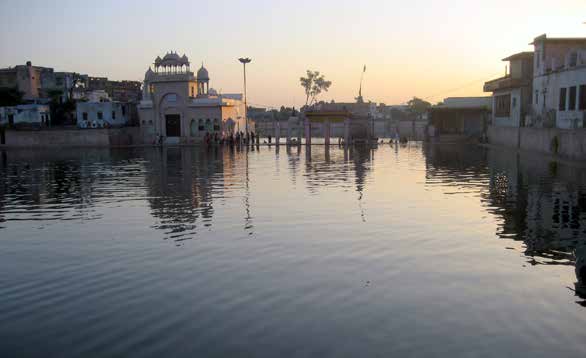
He later came to Vraja-maṇḍala and to the banks of Rādhā-kuṇḍa, his most cherished place of bhajana. In 1935, he established Śrī Kuñja-bihārī Gauḍīya Maṭha on the parikramā path leading towards Rādhā-kuṇḍa, thereby demonstrating that the banks of Śrī Rādhā-kuṇḍa are the topmost place of bhajana for rūpānuga Gauḍīya Vaiṣṇavas and that one approaches that topmost destination only under bona fide guidance. Thus, fortunate souls in the Sārasvata line who are properly under his guidance will not approach the elevated pastimes of Rādhā and Kṛṣṇa at that place solely to relish them with their material senses but to sincerely aspire to serve them selflessly.
Irrespective of his physical location, Śrīla Prabhupāda remained internally situated on the banks of Śrī Rādhā-kuṇḍa, performing nāma-bhajana and service. This was the hallmark of his svabhajana.
His vibhajana-līlā was expressed by his engaging others in various devotional activities, such as establishing maṭhas, preaching, publishing, organizing Vraja-maṇḍala and Gaura-maṇḍala parikramās, arcana, and serving the deities in various ways.
Our Śrīla Gurudeva, following in the footsteps of Śrīla Prabhupāda’s svabhajana-līlā, similarly remained internally ever-present on the banks of Śrī Rādhā-kuṇḍa. He always exemplified the highest ideal of bhajana by his absorption in the exclusive mood of being a maidservant of Śrīmatī Rādhikā, prioritizing service to Her, the āśraya-vigraha, over service to Śrī Kṛṣṇa, the viṣaya-vigraha.
In one period of his life, he resided at Govardhana on the Rādhā-kuṇḍa road, where he performed his vrataof performing nāma-bhajana, kīrtana, smaraṇa, and pada-sevana (daily parikramā). Later, on that very site, as part of his vibhajana-līlā, he established Śrī Giridhari Gauḍīya Maṭha, so as to guide sincere bhakti sādhakas in the sārasvata-rūpānuga line towards aspiring and preparing for service at Śrī Rādhā-kuṇḍa in their eternal svarūpa. He wanted us to follow the example of Śrīla Raghunātha dāsa Gosvāmī, the topmost rūpānuga, and cry for Śrīmatī Rādhikā’s mercy, offering our tears as puṣpāñjali to Her lotus feet. Unless one is genuinely able to do this, one’s adhikāra to truly reside and serve at Rādhā-kuṇḍa, which is exclusively for rādhā-pakṣīya Gauḍīya Vaiṣṇavas, will not arise.
Resplendent with the characteristics of a rūpānuga guru
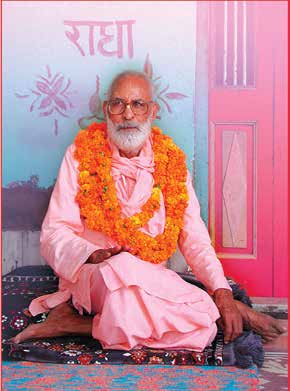 The characteristics of a sad-guru in all four Vaiṣṇava sampradāyas are described in the scriptures:
tad-vijñānārthaṁ sa gurum evābhigacchet
samit-pāṇiḥ śrotriyaṁ brahma-niṣṭham
Muṇḍaka Upaniṣad (1.2.12)
In order to obtain direct realization of the supreme absolute reality, or in other words, to obtain knowledge concerning prema-bhakti, a person who is desirous of his own welfare should approach a sad-guru who knows the real imports of the Vedas and who is established in the truths regarding Śrī Kṛṣṇa. Carrying the fuel wood of sublime faith as an offering to such a sad-guru in one’s hands, one should submit oneself to him with body, mind and words.
tasmād guruṁ prapadyeta / jijñāsuḥ śreya uttamam
śābde pare ca niṣṇātaṁ / brahmaṇy-upaśamāśrayam
Śrīmad-Bhāgavatam (11.3.21)
To know one’s highest welfare one must approach the lotus feet of a bona fide guru. One who is expert in understanding and explaining all the conclusions of the revealed scriptures such as the Vedas, which are śabda-brahma, and who is established in practising them; who has direct experience and realization of Parabrahma Bhagavān Śrī Kṛṣṇa, who is not influenced by any kind of material agitation, and who is devoid of all material expectations is known as a sad-guru. One should take shelter of such a guru through the process of hearing, in order to know the truth regarding sādhana (the process), and sādhya (the goal).
A sad-guru from any Vaiṣṇava sampradāya must be endowed with the characteristics mentioned in the above two verses. However, the specific components of the above verses, such as tad-vijñāna – direct realization of Supreme Absolute Truth; śrotriyaṁ brahma-niṣṭham – being fully established in the aspect of Absolute Reality, as received from one’s guru-paramparā; śābda-brahma niṣṇātaṁ – fully adept in practising and preaching the highest aspect of śābda-brahma nāma-brahma, and also para-brahma niṣṇātaṁ – direct experience and realization of Parabrahma Bhagavān Vrajendra-nandana Śrī Kṛṣṇa, all manifest in the rūpānuga-guru in their superlative degree. In other words, apart from these characteristics, the rūpānuga-guru has the following qualities:
nāma-śreṣṭhaṁ manum api śacī-putram atra svarūpaṁ
rūpaṁ tasyāgrajam uru-purīṁ māthurīṁ goṣṭhavāṭīm
rādhā-kuṇḍaṁ giri-varam aho! rādhikā-mādhavāśāṁ
prāpto yasya prathita-kṛpayā śrī guruṁ taṁ nato ’smi
Śrīla Raghunātha dāsa Gosvāmī’s
Śrī Muktā-carita (4)
I bow down to śrī guru, by whose celebrated mercy I have received the topmost of all holy names, the divine mantra (dīkṣā-mantras), [service to] the son of Mother Śacī, [the association of] Śrī Svarūpa Dāmodara, Śrī Rūpa Gosvāmī, his older brother, Śrī Sanātana Gosvāmī, [residence in] the supreme realm of Śrī Mathurā-maṇḍala, within which are the sweet abodes of Vṛndāvana, Rādhā-kuṇḍa, and Govardhana, as well as a hope within my heart for [the loving service of] Śrī Śrī Rādhā-Mādhava.
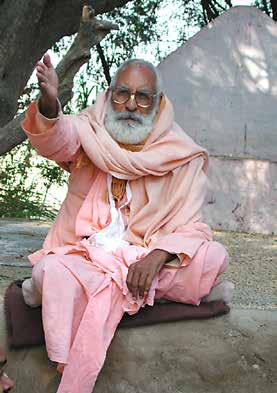 Our Śrīla Gurudeva embodied all of these qualities described by the foremost of rūpānugas, Śrīla Raghunātha dāsa Gosvāmī, thus showing us an example of a true rūpānuga-guru.
Nāma-śreṣṭham (the highest name and the highest conception of the name)
Śrīla Gurudeva’s bestowal of nāma – nay, his every instruction and message – was just like this. He explained that there are two types of names, primary such as Rāma, Narasiṁha, Nārāyaṇa, Dvārakādhīśa, and Kṛṣṇa. And the names of Kṛṣṇa related to His Vraja pastimes – like Rādhā-ramaṇa, Rāsa-bihārī, and Kuñja-bihārī – are the most elevated of all primary names. The secondary names are Parabrahma, Paramātma, Īśvara, etc. Śrīla Gurudeva emphasized chanting the topmost of primary names, which are identical to Rādhā and Kṛṣṇa. And he emphasized that the highest service to Rādhā and Kṛṣṇa available to the jīva can be attained by chanting the mahā-mantra. The highest conception of the holy name, or the highest fruit that can be conceived of or derived by a jīva as a result of chanting the Hare Kṛṣṇa mahā-mantra is service to Śrīmatī Rādhikā under the guidance of Śrī Rūpa Mañjarī. Chanting nāma bestows no higher fruit than this. Time and again, when bestowing nāma to the faithful jīva, Śrīla Gurudeva emphasized the importance of developing this aspiration.
In 1991, he said, “When I saw the commentaries and explanations of Raghunātha Gosvāmī and especially of Jīva Gosvāmī, then I knew that why Caitanya Mahāprabhu has taken this name (the mahā-mantra). Anyone can have the dāsya of Rādhikā if he will chant this name only.”
Manum api (dīkṣā-mantra)
Śrīla Gurudeva enunciated the meanings of the mantras, particularly gopāla-mantra, and the appropriate meditation for them, in order for us to receive the highest benefit from them. Not only that, while giving discourses on Bṛhad-Bhāgavatāmṛtam and also at the time of bestowing mantras, he would specifically explain the five elements that, if observed, will bring the chanting of mantra to perfection. In his Bhajana-rahasya-vṛtti to Verse 1.33, he writes:
(1) The sādhaka should know the meaning of the mantra, and remember the predominating Deity of the mantra (the mantra-devatā) and his own specific relationship with that Deity. (2) Nyāsa – “The Deity of the mantra is my protector” – this conviction is called nyāsa. (3) Prapatti – “I take shelter of the lotus feet of the mantra-devatā” – this is called prapatti. (4) Śaraṇāgati – “I am a jīva who is suffering extremely, and therefore I surrender to the Deity [in six ways]” – this resolve is śaraṇāgati. (5) Ātma-nivedana – “Whatever I have belongs to Him; it is not mine. I am not mine either; I am His for Him to enjoy.” This is ātma-nivedana. If one follows the process comprised of these five limbs, he will quickly attain perfection in chanting his mantras.
In his explanation of Bhakti-rasāmṛta-sindhu-bindu, Verse 4, Śrīla Gurudeva writes:
The guru’s internal, spiritual mood of service to Śrī Rādhikā and Kṛṣṇa is conveyed to the disciple through the medium of a mantra. Everything is given in seed form within the mantra. At first the disciple will not be able to understand, but by performing sādhana and bhajana under the guidance of śrī gurudeva and by meditating on the mantra given by him [with the five aspects mentioned above], gradually everything will be revealed.
Śacī-putra (the son of Mother Śacī)
Who was the son of Mother Śacī? Śrīla Gurudeva repeatedly introduced to us the svarūpa of Śrī Caitanya Mahāprabhu, the purpose for His advent, the glory of His compassionate gift, and that we should not aspire for anything but to drown in that compassion. He spoke untiringly on the meanings of the verses from Śrī Caitanya-caritāmṛta – anarpita-carīṁ cirāt karuṇayāvatīrṇaḥ kalau, samarpayitum-unnatojjvala-rasāṁ svabhakti-śriyam and śrī-rādhāyāḥ praṇaya-mahimā – and wanted us to sincerely reflect on their meaning. And thus, while chanting our gaura-mantra, we should offer ourselves to that Gaura, and through gaura-gāyatrī pray for that Gaura to manifest in our heart.
Svarūpam (Svarūpa Dāmodara Gosvāmī)
And Śrīla Gurudeva introduced us to Śrī Caitanya Mahāprabhu’s dear most personal assistant Svarūpa Dāmodara, an incarnation of Lalitā Sakhī. Svarūpa Dāmodara thus knew how to best assist Śrī Caitanya Mahāprabhu in properly relishing the moods of Śrīmatī Rādhikā. He further emphasized that our real identity is that of a svarūpa-rūpānuga, being in the group of Lalitā Sakhī under the guidance of Śrī Rūpa Mañjarī.
Rūpam (Śrīla Rūpa Gosvāmī)
Through his discourses and worldwide preaching, Śrīla Gurudeva introduced us to the unparalleled glories and teachings of Śrīla Rūpa Gosvāmī, he who fulfilled the innermost desire of Śrī Caitanya Mahāprabhu in this world. He gave us complete rūpānuga conceptions in detail, leaving no room for any spiritual aspiration other than being under the guidance of nitya-sakhīs or prāṇa-sakhīs, headed by Śrī Rūpa Mañjarī. To this end, he also gave us Śrīla Rūpa Gosvāmī’s Upadeśāmṛta, Ujjvala-nīlamaṇi, Bhakti-rasāmṛta-sindhu, Utkalikā-vallarī, Rādhā-kṛṣṇa-gaṇoddeśa-dīpikā, Haṁsadūta etc. Moreover, he impressed upon us the importance of Śrī Caitanya Mahāprabhu's instructions to Śrīla Rūpa Gosvāmī (śrī rūpa-śikṣā), with topics such as uttamā-bhakti, the difference between vaidhī- and rāgānuga-bhakti, Vaiṣṇava aparādha and the weeds that grow upon with the bhakti-latā.
Not only this, Śrīla Gurudeva held a three-day Śrīla Rūpa Gosvāmī conference every year, to which he invited stalwart Vaiṣṇavas and scholars from the Gauḍīya Vaiṣṇava sampradāya and also from other sampradāyas residing in Vraja. Through the medium of their diverse glorifications of Śrīla Rūpa Gosvāmī under his auspices, Śrīla Gurudeva irrefutably established that there is no higher spiritual aspiration than to become a genuine rūpānuga.
Tasyāgrajam (his elder brother, Śrīla Sanātana Gosvāmī)
Every Guru-pūrṇimā, the disappearance day of Śrīla Sanātana Gosvāmī, Śrīla Gurudeva introduced us to him as the sambandha ācārya glorifying his conduct and teachings. Through discourses on sanātana-śikṣā from Śrī Caitanya-caritāmṛta, he revealed the essential teachings defining the jīva’s eternal relationship with Kṛṣṇa as nitya-kṛṣṇa-dāsa, that the jīva’s sādhya is to develop unalloyed prema for Him, and that the sādhana to do so is śuddha-bhakti. And through a series of discourses on the complete Bṛhad-Bhāgavatāmṛtam by Śrīla Sanātana Gosvāmī and by publishing all the three volumes of this book in Hindi, he familiarized the bhakti-sādhakas with the various manifestations of Bhagavān. He would often speak hari-kathā from this book to illustrate the gradation of the bhakti of different bhaktas (jñānī-bhakta, śuddha-bhakta, premī-bhakta, premapara-bhakta and premātura-bhakta), the stories of Nārada Muni searching for the topmost bhakta. He would narrate the story of Gopa-kumāra attaining various abodes on the strength of chanting the gopāla-mantra and Gopa-kumāra’s final destination of Vraja. Thus Śrīla Gurudeva filled us with the essence of Śrīla Sanātana Gosvāmī’s teachings to fix our highest spiritual destiny with help of the gopāla-mantra.
Uru-purīṁ māthurīṁ goṣṭhavāṭīm (the supreme realm of Śrī Mathurā-maṇḍala)
Śrīla Gurudeva has given us the topmost Purī (abode), Mathurā-maṇḍala, in an unparalleled way.
By the grace of his Śrī Gurudeva, he was blessed with the responsibility of carrying forward, within Vraja-maṇḍala, the Sārasvata Gaudiya line. By executing the orders and desires entrusted to him by his Śrīla Gurudeva, and on the strength of his bhajana he realized in his heart the unprecedentedly sweet glories of Vraja-maṇḍala, and thus remained fully submerged in that ocean of sweetness. He was desperate to share the sweetness of Vraja-maṇḍala with the jīvas of this world, and for this cause, he unfailingly performed Vraja-maṇḍala parikramā for nearly sixty years, taking souls with him through the holy land and holy dust of Vraja, so that they could experience that sweetness. Āsaktis tad-guṇākhyāne prītis tad-vasati-sthale (Bhakti-rasāmṛta-sindhu 1.3.26). He himself had so much attachment (āsakti) for this land of Vraja; likewise, on parikramā, he had such love (prīti) for tirelessly glorifying the pastime places.
Those who were unable to come to Vraja were able to do parikramā via the book he published, Śrī Vraja-maṇḍala-parikramā. Śrīla Gurudeva had deep faith in the boon that Śrī Nārada Muni received from Śrī Kṛṣṇa that by touching the dust of these pastime places, one achieves vraja-prema. By publishing this book, Śrīla Gurudeva wanted devotees to hear about the sweet pastimes and at least touch those places by mind. This story is narrated by Śrīla Sanātana Gosvāmī in Bṛhad-Bhāgavatāmṛtam.
Śrīla Gurudeva would be so engrossed in that sweetness of Vraja that it was impossible to distract him from it. Even if he were speaking the glories of his guru-varga or speaking with a disciple who was in difficulty, it was clear to all that he was never separated from Vraja for a moment. Whether preaching in India or abroad, his personality, his presence, his hari-kathā, and also the specific stava-stutis and kīrtanas he asked to be sung evoked an ambiance of Śrī Vṛndāvana-dhāma. As a result, he expertly awakened people’s longing to behold Vraja, their eternal home. For the purpose of giving the jīvas an opportunity to experience that sweetness, he went to the trouble of building maṭhas in Vṛndāvana and Govardhana.
Rādhā-kuṇḍaṁ giri-varam aho! (the sweet abode of Rādhā-kuṇḍa and the topmost mountain, Śrī Girirāja-Govardhana)
By his exemplary conduct and hari-kathā (ācāra and pracāra) he instilled in his disciples and followers an understanding of the progressive superiority of the pastime places of Vraja dhāma and an aspiration to attain service there. On the basis of rūpānuga conceptions, he revealed and explained through a comparative analysis that Mathurā is superior to Vaikuṇṭha, Vṛndāvana is superior to Mathurā, Govardhana is superior to Vṛndāvana and that the highest perfection is service on the banks of Rādhā-kuṇḍa at Govardhana, who fulfils all of our spiritual aspirations.
Rādhikā-mādhavāśā (a hope within my heart for the loving service of Śrī Rādhā-Mādhava)
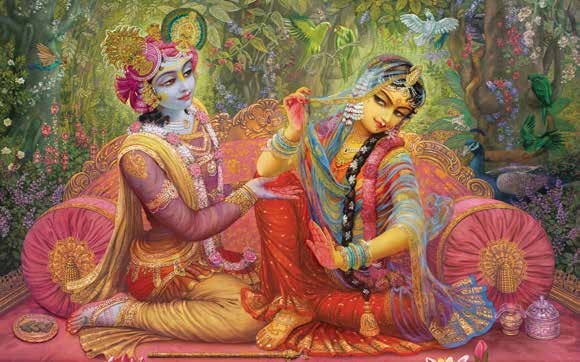
Śrīla Gurudeva was anxious, as mentioned, for us to develop a genuine greed and aspiration, a hope, for the service of Śrī Rādhā-Mādhava and nothing else. So, along with speaking hari-kathā and publishing books, he gave us a visual, a window, to the sweetness of the pastimes of Rādhā-Kṛṣṇa in Vraja, by directing artwork such as “Sevā-kuñja”. This painting displays various services that the mañjarīs and sakhīs perform for the Divine Couple, inspiring us to one day attain our own specific service.
Prapto yasya prathita-kṛpayā (by whose celebrated mercy I have attained all of this)
Śrīla Gurudeva has unfailingly given us all of these conceptions. He was so compassionate and so magnanimous that he gave them freely without caring for his personal reputation, and without our even seeking or desiring them.
Śrī guruṁ taṁ nato ’smi (to that Śrī Guru, I bow down)
Śrīla Gurudeva has thus perfectly fulfilled the role of a rūpānuga-guru. For all this we perpetually bow down at his lotus feet. However, despite receiving all these wonderful and causelessly compassionate gifts from him, if we fail to seriously contemplate and cultivate them in whatever time we have left in these bodies, and if, instead, we remain occupied with trifling things, we will miss the opportunity to receive a great fortune, a chance of many lifetimes. It can be compared to coming to the bank of a river but still remaining thirsty. Similarly, coming into the proximity of a rūpānuga-guru and not internally endeavouring to embrace his mercy is to deprive ourselves of the greatest fortune.
Protecting the rūpānuga conception of parakīya-bhāva-upāsanā
A prominent part of Śrīla Gurudeva’s mission was to protect the speciality of the rūpānuga Gauḍīya Vaiṣṇavas, the parakīya-bhāva-rasa-upāsanā of Vraja. He tirelessly translated and published sacred texts that revealed this, such as Gīta-govinda, Ujjvala-nīlamaṇi, Prema-sampuṭa, Camatkāra-candrikā, Bhajana-rahasya, Rāga-vārtma-candrikā and others. Furthermore, Śrīla Gurudeva took special interest in renovating the place of Śrīmatī Rādhārāṇī’s mother-in-law, Jaṭilā, in Jāvaṭa. The very existence of Jāvaṭa, Saṅketa near Nandgāon, Belavana and various other pastime places in Vraja authenticate parakīya-bhāva-rasa-upāsanā in Vraja (pārakīyā-bhāve ĵāhā vrajete pracāra).
Most of the people of Vraja-maṇḍala, as well as people all over the world who follow sanātana-dharma, know and worship Śrīmatī Rādhārāṇī as the married consort of Kṛṣṇa (svakīya-bhāva-upāsanā). While from the perspective of tattva, She is His eternal potency, in order for Kṛṣṇa to relish parakīya-rasa, She has to be married to someone else (another form of Kṛṣṇa).Those from the various sampradāyas cannot slightly conceive of the Gauḍīya Vaiṣṇavas’ speciality, the pristine purity of parakīya-upāsanā, in which Śrīmatī Rādhārāṇī is apparently married to someone other than Kṛṣṇa. But in fact, the pastimes of parakīya-rasa extract the pinnacle of śṛṅgāra-rasa, which is the most enthralling speciality of parakīya-bhāva-rasa-upāsanā. Even the upāsanā of the Nimbārka sampradāya of Vraja has no access to this, as there, Rādhārāṇī is nitya-nikuñja vihāriṇī, perpetually sporting with Kṛṣṇa in a kuñja. There is therefore no excitement or anxiety in service for the gopīs, who anticipate the breaking of that pastime (kuñja-bhaṅga-līlā) just before the sun rises (niśānta-līlā).
Śrīla Rūpa Gosvāmī states in Ujjvala-nīlamaṇi that prominent components of parakīya-rasa are the moods of durlabhatā (the rare opportunity to see, touch, and speak to one another), vāmyatā (contrariness), prachanna-kāmukatā (concealed passion and desire) and nivāraṇatā (opposition from society and religion), all which enhance to the maximum intensity and excitement. Apart from this, the eight conditions of nāyikās are described by Śrīla Rūpa Gosvāmī in Ujjvala-nilamaṇi: (1) Abhisārikā. Thinking, “I will serve Kṛṣṇa,” the nāyikā leaves home and goes to the forest. (2) Vāsaka-sajjā. She decorates the forest grove. (3) Utkaṇṭhitā. She eagerly watches the path, waiting for Kṛṣṇa to come. (4) Vipralabdhā. Śrī Kṛṣṇa does not show up at the rendezvous, even after fixing the time and place of the tryst by a signal or hint. (5) Khaṇḍitā. Upon Kṛṣṇa’s late arrival, she sees marks of His having enjoyed with another gopī. (6) Kalahāntaritā: Sending Kṛṣṇa away after arguing with Him out of jealousy, she becomes very unhappy. (7) Proṣita-bhartṛkā: Her beloved Kṛṣṇa goes to Mathurā and does not return even after many days. She suffers greatly. (8) Svādhīna-bhartṛkā: Having engaged in amorous sports, the svādhīna-bhartṛkā-nāyikā orders her hero, Śrī Kṛṣṇa, who is completely subjugated by her, to perform tasks such as decorating her. These eight states of being are experienced only by the heroines. The intensity and excitement of meeting in each of these eight conditions of the parakīya-nāyikās is much higher than that of the svakīya-nāyikās, who are always with their beloved. This makes parakīya-rasa-upāsanā significantly more relishable than any other type of relationship with Kṛṣṇa in madhura-rasa.
By translating into Hindi these and other details of parakīya-rasa-upāsanā as described by Śrīla Rūpa Gosvāmī in Ujjvala-nīlamaṇi, Śrīla Gurudeva introduced everyone to such thrilling service and generated in them an aspiration to internally proceed in that direction. Śrīla Gurudeva would specifically hear and relish, sometimes with tearful eyes, the descriptions of these eight conditions of the parakīya nāyikā (particularly Śrīmatī Rādhikā) in songs such as Rati-sukha-sāre gatam abhisāre... dhīra-samīre yamunā-tīre and other songs from Gīta-govinda, composed by Śrī Jayadeva Gosvāmī.
Thus Śrīla Gurudeva practised and preached the rūpānuga-parakīya conceptions. As a bona fide rūpānugaGauḍīya Vaiṣṇava ācārya, he upheld the highest standards of Vaiṣṇava dharma, carried this responsibility of fulfilling the mano’bhīṣṭa of his guru-varga on his head, despite facing multiple obstacles, and presented it in its pure form as the highest aspiration for the jīvas.
The people of this earthly Vraja, however, and also many Vaiṣṇavas in the Gauḍīya sampradāya, not to speak of other sampradāyas, were not aware of these authentic conceptions. Had Śrīla Gurudeva not given so much importance to preserving, protecting and propagating the correct conception of parakīya-bhāva-rasa-upāsanā, this matchless gift that Śrī Caitanya Mahāprabhu Himself had come to taste and distribute to the jīvas of this world would soon be lost.
Ratha-yātrā in Mathurā
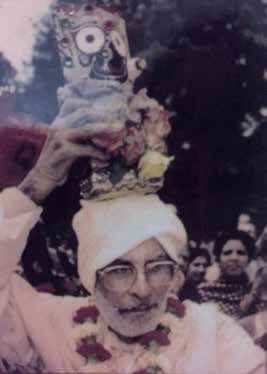 Yearly, at the time of Ratha-yātrā, Śrīla Gurudeva would speak on the esoteric moods of this festival:
The topic of this Ratha-yātrā festival is related to kṛṣṇa-prema [rāgānuga-bhakti]. It is not a subject matter related to vaidhī-bhakti. Before the advent of Śrīman Mahāprabhu, this Ratha-yātrā pastime was a subject matter of vaidhī-bhakti only.
Even today, for the practitioners of vaidhī-bhakti, this festival is observed in accordance with vaidhī-bhakti. But what is this entire pastime about? Ratha-yātrā reveals the epitome of prema. This pastime contains nothing ordinary or inferior.
Gaura moves ahead and Śyāma very slowly travels behind Him. Why slowly? Seeing Mahāprabhu’s expressions of prema [Śrīmatī Rādhikā’s moods], Jagannāthadeva becomes absorbed in bhāva and cannot move quickly. Although He has no energy left to move further, nevertheless, He must keep moving, so He moves very slowly and gradually. How many deep emotions Caitanya Mahāprabhu was experiencing as He became imbued with all the moods of Śrīmatī Rādhikā.
His hari-kathā has been compiled in book form, Śrī Jagannātha Ratha-yātrā. The deep significance of Ratha-yātrā, being most confidential, is not widely known. This book is rich with the significance of the loving moods of Vraja, the novel realm of divine love, which gives not only Gauḍīya Vaiṣṇavas but everyone an invaluable perspective of this wonderful pastime.
Śrīla Gurudeva, fully immersed in relishing the highest aspects of this pastime, distributed them through his hari-kathā and also initiated a simple Ratha-yātrā festival in Mathurā.
The speciality of this Mathurā Ratha-yātrā was that the inner moods of the festival were given emphasis, not the grandeur. Possibly, this is the only Ratha-yātrā that has a route traversing the bank of the Yamunā, as described in the first verse of Śrī Jagannāthāṣṭakam, in which the sight of Yamunā serves as a stimulant (uddipana) to remind Śrī Jagannāthadeva of His Vraja-pastimes:
kadācit kālindī-taṭa-vipina-saṅgīta-taralo
mudābhīrī-nārī-vadana-kamalāsvāda-madhupaḥ
ramā-śambhu-brahmāmara-pati-gaṇeśārcita-pado
jagannāthaḥ svāmī nayana-patha-gāmī bhavatu me
Sometimes Śrī Jagannāthadeva makes supremely sweet, melodious music (with His flute) within the groves along the banks of the Yamunā. Like a bee thirsty for honey, He jubilantly relishes the lotus faces of the gopīs. His feet are offered worship by great personalities such as Lakṣmī, Śiva, Brahmā, Indra, and Gaṇeśa. May Jagannātha Svāmī kindly enter the pathway of my vision.
by the Rays of The Harmonist team